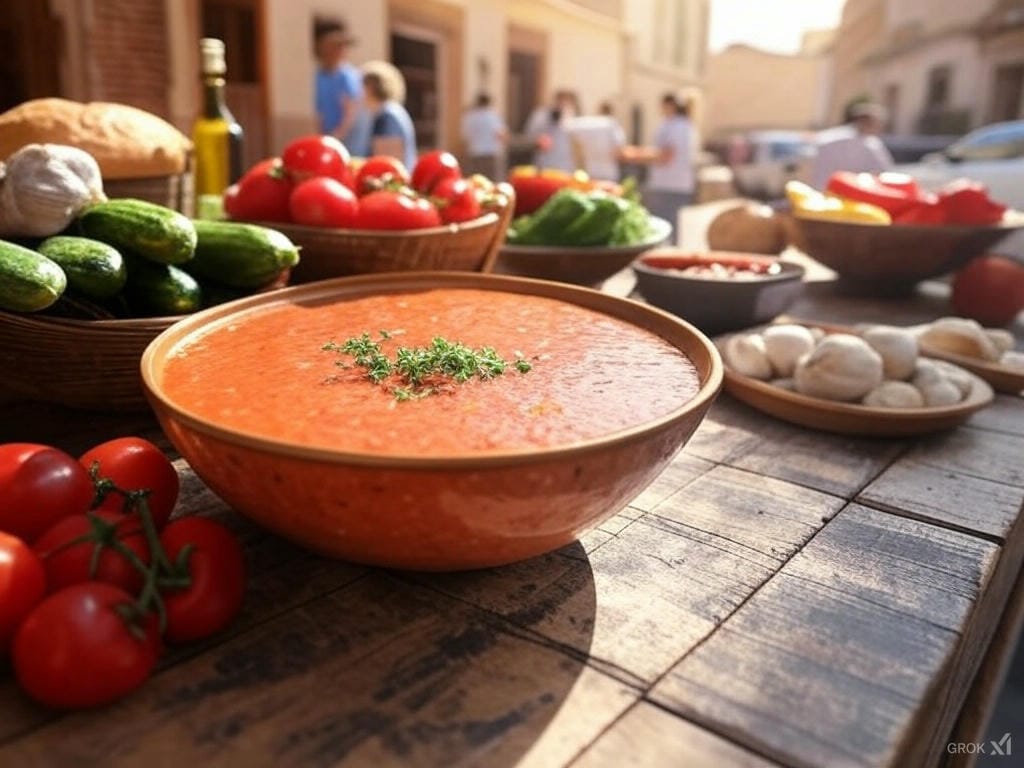

There are few things that capture the spirit of a Spanish summer like a chilled bowl of gazpacho or salmorejo. These cold soups aren’t just recipes; they’re traditions passed down in clay bowls and family kitchens, where food is simple, nourishing, and full of soul.
Both gazpacho and salmorejo are rooted in the south of Spain, where the sun shines generously and tomatoes ripen into candy-sweet perfection. While they share some ingredients, they’re quite different in personality: gazpacho is light and refreshing, perfect for sipping in the shade, while salmorejo is thick, creamy, and rich—a spoonful is a meal in itself.
Let’s take a closer look at these two summertime staples, starting with gazpacho.
Gazpacho: A Cool Refuge from the Heat
Gazpacho is the essence of Andalusian countryside cooking. It dates back centuries, to a time when laborers in the fields needed something hydrating, nourishing, and made from humble pantry ingredients. Before tomatoes arrived from the New World, gazpacho was a white, garlicky mixture of bread, vinegar, olive oil, and water. But over time, as tomatoes, cucumbers, and peppers became common, the gazpacho we know today took shape.
It’s meant to be eaten cold—very cold—and it’s more than just a soup; it’s practically a drink. In fact, in many homes, it’s served in a glass, straight from the fridge, sometimes even with ice cubes. It’s what you reach for when the air stands still and the sun is at its highest.
Traditional Recipe
First we have to say that as all traditional recipes, each home has its own version but here you have a basic one. Try it! And enjoy introducing any twists to make it to your own taste.
Ingredients:
1 kg ripe tomatoes (preferably plum or vine-ripened, juicy and red)
1 Small green bell pepper (the Spanish “pimiento verde,” not spicy)
1 Peeled small cucumber (Optional)
1 Clove garlic (adjust to taste)
4 Tablespoons extra virgin olive oil
2 Tablespoons sherry vinegar (vinagre de Jerez—or red wine vinegar as a pinch)
Salt to taste
Cold water (start with one glass and then adjust to taste)
Optional garnishes: diced cucumber, pepper, onion, croutons.
Cooking:
Prep the veggies: Roughly chop the tomatoes, green pepper, cucumber, and onion. Peel the garlic clove and remove its core if it’s strong.
Blend it up: Toss the tomatoes, pepper, cucumber, onion, garlic, and soaked bread into a blender or food processor. Add a pinch of salt, the olive oil, and vinegar. Blend until smooth. If it’s too thick, trickle in cold water little by little until it’s velvety but not watery—think smoothie consistency.
Taste and tweak: Adjust salt, vinegar, or oil to your liking. It should be tangy, rich, and refreshing. We recommend you, to have a softer texture, pass it through a strain.
Chill: Pour it into a pitcher or bowl and refrigerate for at least 2 hours. Gazpacho shines when ice-cold.
Serve: Ladle into bowls or glasses. Top with your choice of garnishes—diced veggies for crunch or croutons for texture. A final swirl of olive oil never hurts.
This is gazpacho as it’s loved in Spain: bold, fresh, and unpretentious. Pair it with a crusty baguette and some jamón if you’re feeling indulgent. ¡Buen provecho!
Salmorejo: Rich, Creamy, and Cordobés
Where gazpacho is light and hydrating, salmorejo is velvety and indulgent. Originating in Córdoba, it’s thicker and simpler—fewer ingredients, no cucumber or pepper, and a much higher bread-to-liquid ratio. It was a way to make the most of stale bread and ripe tomatoes, blended into a silky purée that’s spooned up rather than sipped.
In Córdoba, salmorejo is more than a dish—it’s comfort food. Every household has its own preferred balance of ingredients, but the essentials remain: ripe tomatoes, good olive oil, garlic, vinegar, salt, and bread. Always topped with chopped hard-boiled egg and shavings of jamón serrano, it’s as satisfying as it is simple.
Traditional Recipe
Like the Gazpacho, each family has its own version, but here you have the one we make at home.
Ingredients:
1 kg ripe tomatoes
200 g stale white bread (ideally rustic, crust removed)
1 clove garlic
150 ml extra virgin olive oil
1–2 tbsp sherry vinegar
Salt to taste
Toppings: chopped hard-boiled egg and diced jamón serrano
Cooking:
Wash and roughly chop the tomatoes.
Soak the bread in a little water until it softens.
Blend the tomatoes, soaked bread, garlic, vinegar, and salt until smooth.
While blending, drizzle in the olive oil slowly to create a thick, creamy emulsion.
Chill for at least two hours in the fridge.
Serve cold in a bowl, garnished with egg and ham.